Ayman Soliman spent 73 days in ICE detention, prompting a public outcry he believes led to his release. ‘People prayed first… then put their faith in action.’

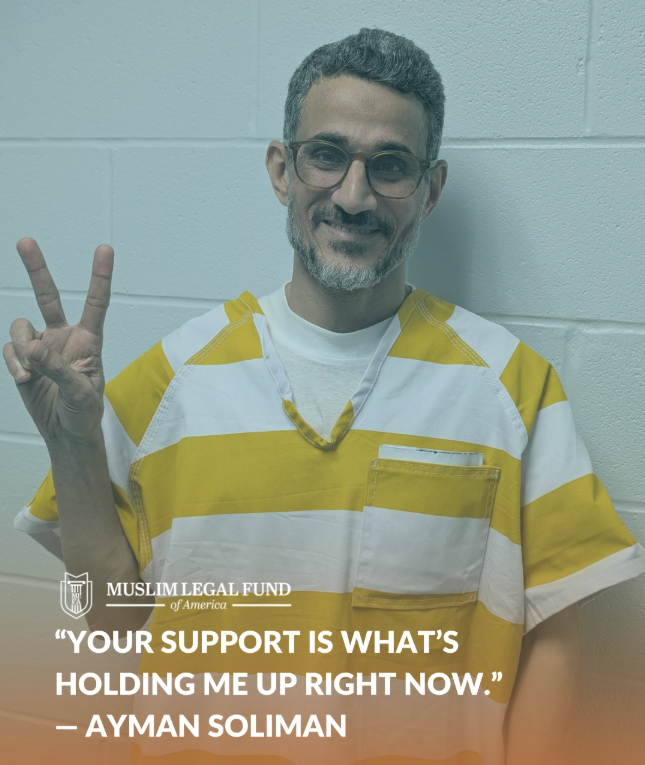
Sarah Kelley: Before you arrived in the U.S., what was your perception of how this country treated immigrants and refugees? And how has that compared to your personal experience?
Ayman Soliman: Like many people who had never made it to the U.S., America seemed like paradise. I viewed it as a beacon of hope and freedom and respect for human rights…
My intention when I came here was not to apply for asylum. It was to study filmmaking for a few months until things cooled down in Egypt. Then things actually got more complicated. When I decided to apply for asylum, I knew that people who come from the Middle East or have certain backgrounds might face some discrimination, but in the end, they were still treated as humans… But what happened [to me last year] actually changed that altogether.
I don’t think I still believe that America is the land of the free. And I’m not really sure how long I will need before I call this country home.
SK: It sounds like this experience has shattered your sense of belonging in a lot of ways. But are there places in this country where you still feel like you belong?
AS: I’ve worked hard in this country and was very invested in serving the community at large, and I found peace in being a hand that can bring comfort to people when they need it. I never imagined I would be treated this way. So this experience has impacted how I look at the U.S. in general, especially with the current administration. Things might change at some point, but for now, I doubt that. But at the same time, my community in Cincinnati, especially the people of faith, gave me a thousand reasons to call Cincinnati home forever, and I really appreciate that.
SK: Can you share any instances, prior to your detainment, when you felt unwelcome or othered in the U.S.?
AS: As a Muslim, I feel like I always walk down the street with an X on my back. I understand that many people are uneducated, and there is a huge industry that feeds Islamophobia. Being brown with an accent gives me two more Xs. So yes, I had experienced discrimination, but never as severe or as life threatening as what recently happened to me…
One thing I’ve learned from the Islamic faith is always to find something positive and be grateful for it. So I’m always looking at the positive things about life in the U.S. When I’ve had three or four incidents where people were racist or discriminatory against me, I always looked at the other thousands of people that I interact with who show hospitality and kindness.
SK: That’s a beautiful approach to life. In the aftermath of what you have endured, what beauty have you encountered?
AS: Before I got released, I was informed about the great waves of kindness and support and love that I got from people, not just from Cincinnati and Northern Kentucky, but from all over the country. When I got out, I expected it would take a long time to heal from the wounds of this unjust detainment, but the love of people that I meet every single day has helped me cope.
I was just telling a friend that people treat me like a celebrity… I’ll go to a restaurant, and the manager comes out and gives me 50% off; I walk down the street, and this police officer stops me and says, “My daughter was following your case. Can I take a selfie?”
I’m grateful for the love and kindness.
SK: As much as you’re comfortable, can you describe what life was like during those 73 days?
AS: I was jailed at the Butler County Jail, which is a maximum-security jail, so detainees like us shouldn’t actually be there in the first place… From the moment I got detained, the next 14 hours were the darkest in my entire life. I was detained and tortured four times in Egypt, and when I came to the U.S. and granted asylum, I thought I was leaving that behind. Never had I imagined in my worst nightmares that I would be treated this way.
There is a systematic reception that tries to break you so you can accept the discrimination and the violations of law that happen inside that jail. I was left in a freezing room; they took off the upper part of my clothes and it was literally freezing. I do not imagine it was more than 30 degrees. You’re supposed to use a toilet in front of 12 other people. It is intentional breaking of the detainees.
I never imagined this was the case with American jails. You guys got me here because you thought I should be deported… just treat me well until I get deported or I win my case. Why would you torture me this way? And when I objected, I got mocked and somebody started laughing at me as if I am an idiot…
I would spend 19 hours locked in a small box, inside a big box, never seeing the sun for 73 days. You’re allowed out of your cell to make phone calls, find something to eat, talk to the other inmates, take a shower. There are four showers that are open to people, but there’s no privacy. If you get sick, you might have to wait for two, three days before you see a nurse to check on you. So basically, it was inhumane conditions, mostly locked inside a small cell.
SK: How did you cope? Where did you find strength while you were detained?
AS: To be honest, although the beginning was shocking, in the first two weeks my attorneys promised I would get released on bond. So, I thought it was a matter of weeks…
Back in 2021, I had applied to work as a prison chaplain in order to serve and help those individuals, but I got denied. Now, I thought: God put you in this place; try to utilize your time to support the other inmates.
I spent time talking to fellow inmates, listening to their stories, supporting them. Then the government denied my right to bond, and I knew I would remain in jail for a few months, at least, if not deported. Life was really rough, and there were three things that kept me going:
One, of course, my relationship with God and my faith. I can’t imagine I would survive one day without feeling the presence and love of God. The second was the outpouring of love and support from my community. From day one, people started protesting, and that really meant a lot. Also, I got 760 letters from people — 99% of whom I had never met, and the majority were from people of faith, which was beautiful. Feeling that you’re not forgotten was a great source for me to survive.
I went through a lot of dark moments in jail… I was someone who was waiting for his deportation order to go back to Egypt and get killed. Jail was the least of my challenges to deal with at the time, but feeling this support from the people that decided to keep repeating my name when the government wanted to just hide me in their paperwork as a number was very important…
I think the main goal of the government when they started this deportation campaign was to tell those of us who do not belong to the white Christian nationalist ideology that you don’t belong here. I think people in my community and all over the country said otherwise — you do belong here. And that was a great source of support.
The third thing that kept me surviving was my relationship with the other detainees. I felt like this was an opportunity to find the meaning in this — why God put me in this place. And it’s probably because some of them needed me, and I just had to get over my own pain and struggle in order to serve these humans. And the outcome was incredibly positive. I built some connections that I would miss a lot if I was not detained. I met some of the most beautiful human beings I ever met in my life.
SK: Can you talk more about how these connections sustained you while detained?
AS: Sometimes sharing the same suffering and the same pain can create a community and help us have a sense of belonging. And I tried to look at the positive side: I’m meeting people I might never meet again, so let’s see where this will lead. Let me explore these beautiful human connections.
I’m naturally very close to the Latino community. I speak Spanish, so it made a big difference. Most of them were religious people, Catholics or Christians, and they appreciated having an imam. Many people actually live their life hearing a lot about Muslims, but they never meet someone who can really represent Islam and talk about it. So we had lots of conversations on Islam. It was a great time of learning from each other. I also had the privilege of sharing a prayer service with the Christian minister who visited the jail. He and I led an interfaith service for Muslims and Christians, and what a beautiful thing.
One of the things I will never forget is a gentleman from Mexico who shared my cell for five days. Muslims pray early in the morning, but it’s recommended to pray one hour before that, like 4 a.m. So I would try to pray silently, because I don’t want to wake him up. I started reciting the Quran, and he could hear it. After I finished, he said, “What song were you singing?”
I told him, “It’s a song from the Quran.”
He said, “My grandma in Mexico, she used to sing a Christian song that was very much like that, and you just took me to this time when I was a little kid. Next time, can I pray with you? And for the next five days, for every single prayer, he was sharing the prayer with me. When he got deported five days later, he asked the officer to give him five minutes, and his only wish was to pray with me before he left.
SK: How has your faith changed throughout this experience?
AS: This was the biggest test I’ve faced in my entire life. In Islam, we believe life is in its entirety a test, but this was the most difficult of all. I was never closer to God and to my faith than I was in most of these 73 days.
The more complicated my situation was, the more difficult my chances of getting released became, the more I felt His presence…
I always try to show some gratitude. This is something I forgot for too long, and I have come to appreciate the little things… like going to the mosque and being in a big congregation. In detainment, I got put in solitary confinement because I advocated for the Muslim inmates to have a congregation in prayer. In order to cope, I started looking at the positive side. The food was really difficult to eat, to say the least, and I started remembering those who are suffering and starving, you know, because they can’t find something to eat.
It really changed my relationship with my faith, how I practice it, and I’m sure it will impact my relationship with my God and faith until I leave this world.
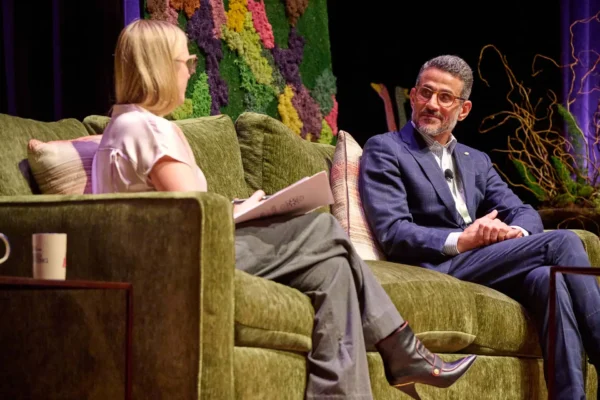
SK: While detained, you were able to watch some of the news coverage chronicling the outcry over your case. How did that feel?
AS: This was one of the things that kept me alive — knowing somebody is fighting for me and raising their voice. Unfortunately, some officers were not happy that I was getting all the support, they knew that it was probably giving me strength and emboldening me when I advocated for my rights and the rights of other people.
SK: There were many letters written on your behalf, and one in particular likely played a key role in your case gaining traction: A Christian woman, whom you did not know, wrote a letter to a Jewish lawmaker in Ohio, asking him to help you. The letter moved him to get involved… and from there, it kind of took off. Can you elaborate on how this played out?
AS: One of the things that brought me a lot of comfort in jail was to know my brothers and sisters in the faith community in Cincinnati and Northern Kentucky were at the heart of this movement. I love interfaith work, and I love to build bridges between Muslims and other communities…
People from every faith tradition not only prayed, but they started talking to elected officials, signing petitions, protesting, holding vigils. The biggest prayer service that was held for me was in a church not in a mosque. The number of the Jewish rabbis who signed the petition for my release was 31, which is almost the entire number of Jewish rabbis in the Cincinnati area — more than the number of imams who signed the letter. The number of letters I got was overwhelming, but one of these letters really made a big difference…
When people put their faith in action, that’s what matters. If faith communities just sat in their houses of worship and cried and prayed, I don’t think things would have changed. But this woman was one of the mothers who had a sick child at Cincinnati Children’s, and I had the honor of serving her and her child until he passed away. I don’t know who she was, as I deal with an average of 30 deaths every year, so I don’t know which family.
While detained, I talked to our Jewish congressman, and he said his office got around 1,500 emails, letters and phone calls asking him to advocate for me. One letter stood out… A woman who lived in his neighborhood left the letter in front of his door. He put it in his pocket as he was heading to D.C. He got busy with his day, and at some point he realized the letter was still in his pocket, so he started reading it. And he started crying because the lady was very eloquent and kind… she explained how I helped her during the most difficult time of her life, and how I made her feel respected and heard and supported. He told me, “I felt like I owed you a favor back. You supported this woman when she needed that, and it’s not fair to let you down.” I believe all the advocacy — including this letter — led to him getting involved… all these elements together led to my release.
SK: In times of crisis or injustice, you often hear the words “thoughts and prayers.”. As a person of faith, and as someone who’s been on the receiving end of faith in action, how do those words sit with you?
AS: If people had stayed at their houses of worship, praying for me day and night, I don’t think anything would have changed. Not that God cannot change. Of course, God can do everything. But how I understand our relationship with God, when it comes to the Divine Decree, is we are partners with God. He has some part, and we have some part. If we don’t do our part, I don’t think things would work…
In my case, people prayed first, then put their faith in action. They did not just read the Bible or the Quran or the Torah… they tried to implement what the Torah told them to do or what the Bible asked them to do in these kinds of situations: to stand for justice, to show hospitality to the stranger.
I’m one of very few people out of tens of thousands of detainees that got the chance to get out, and this was because of faith in action.
SK: What would you challenge all of us to do differently to foster belonging?
AS: I advise and ask everyone to find some ways to help with the immigration situation. Not everyone should go and open their camera and film ICE, because this is too dangerous and not everyone is capable of that. But everyone is capable of really checking on our immigrant neighbors…
Checking on our neighbors and reaching out to organizations that provide support to immigrants is a good place to start.
Interview edited for length and clarity.