[***placeholder***]
In 1988, Louisville Magazine published the third-annual Best of Louisville awards, and in addition to having subscribers name favorites in 40 categories (including VHS Rental Shop, which ultimately went to Roadrunner Videos, RIP), we also asked voters:
What single word best describes Louisville in 1988?
Readers filled in a perforated paper ballot, with prepaid postage, inside an issue of the magazine, and the top three answers to that question, in order, were:
Friendly
Comfortable
Home
True enough. But leaving out so much.
So nearly 40 years later, I decided to ask it again, this time to a group of Louisvillians we’ve been putting together over the past few years. Every week, I ask this growing group some questions about our city — multiple-choice, one-word answers, open-ended, sometimes even a Mad Lib — and share back with them what we’re learning. I was curious to see what an update from ’88 might look like:
What single word best describes Louisville today?
Whenever I ask a question like that, I make a word cloud to get a quick pulse check of how we’re doing. It wouldn’t have made much sense to make a word cloud with only three answers from 1988, but if we had, it would have looked like this:
What single word best describes Louisville in 1988?

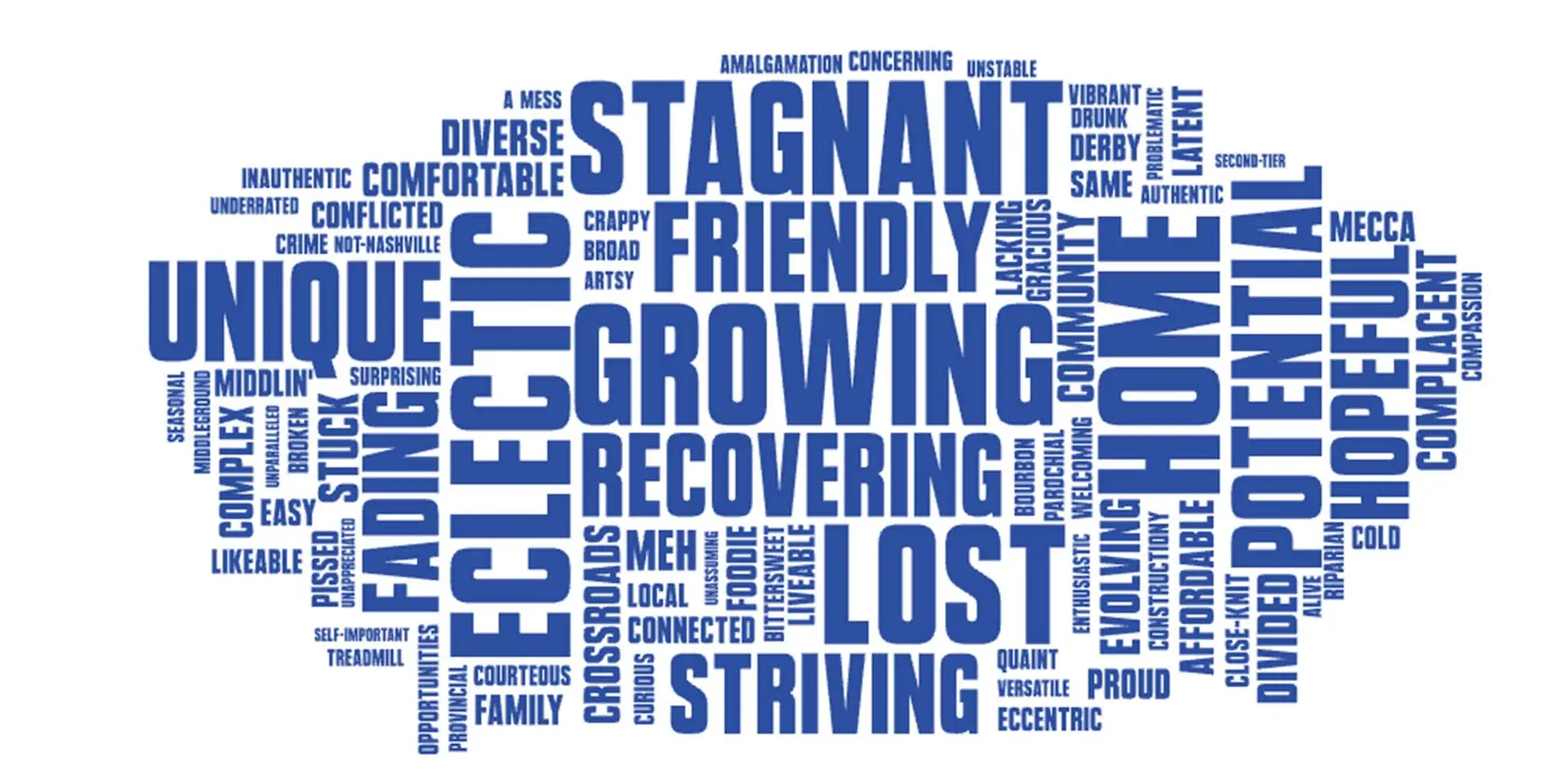
Today, the updated version still includes those three words — friendly, comfortable, home — but tells a more complicated story:
What single word best describes Louisville today?
Some of what folks shared made me laugh: drunk, not-Nashville, construction-y. One of us went with treadmill, saying, “Same thing. Over and over. And over and over again.”
One thing I noticed was how many of us reached for words tied to a theme that keeps coming up: belonging. Words like home, community, connected, welcoming, friendly, neighborly, loving, close-knit, diverse.
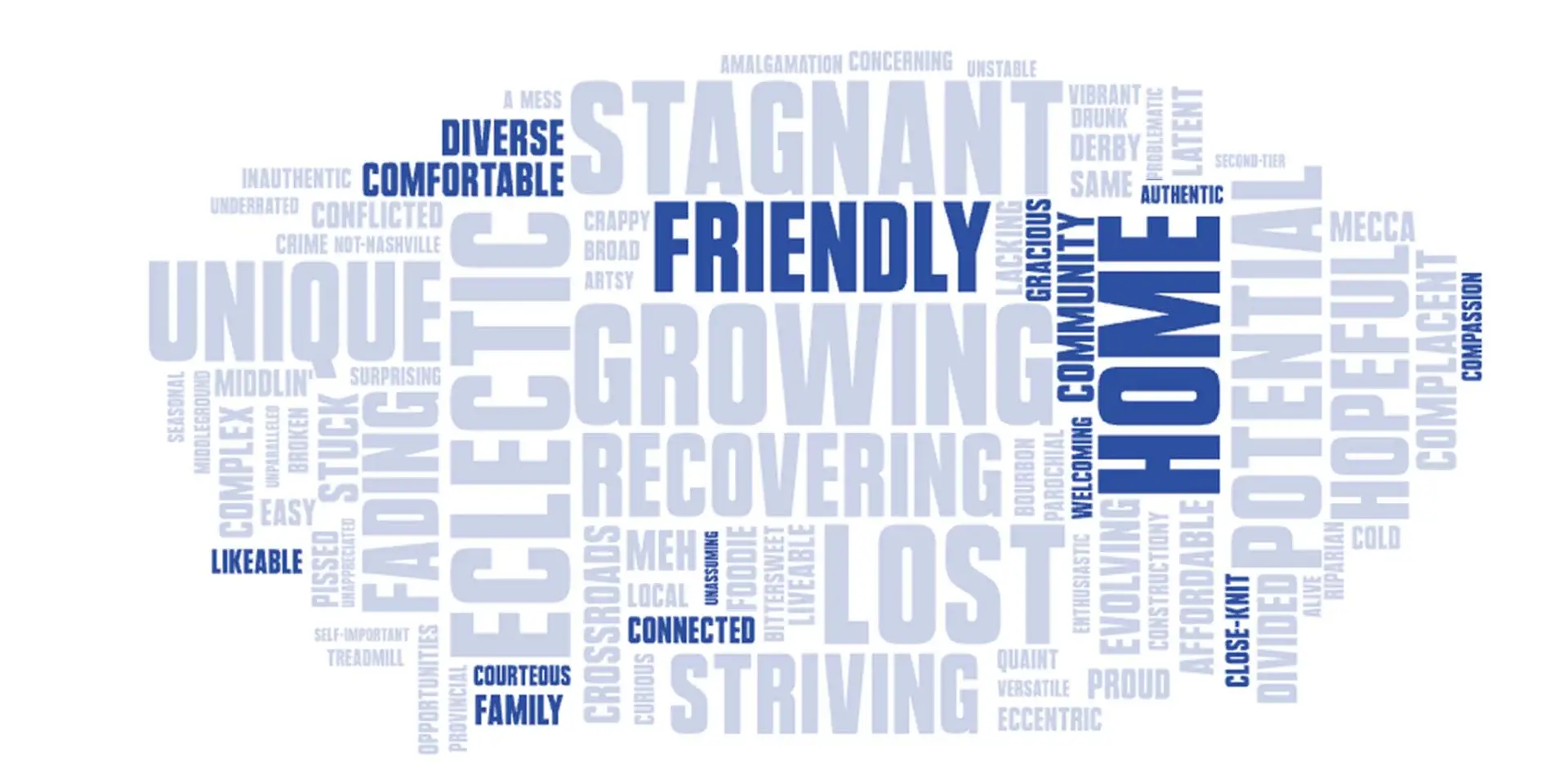
But what also stood out to me was how almost just as many of us reached for the opposite: segregated, divided, disunion, lonely, fragmented, isolated.
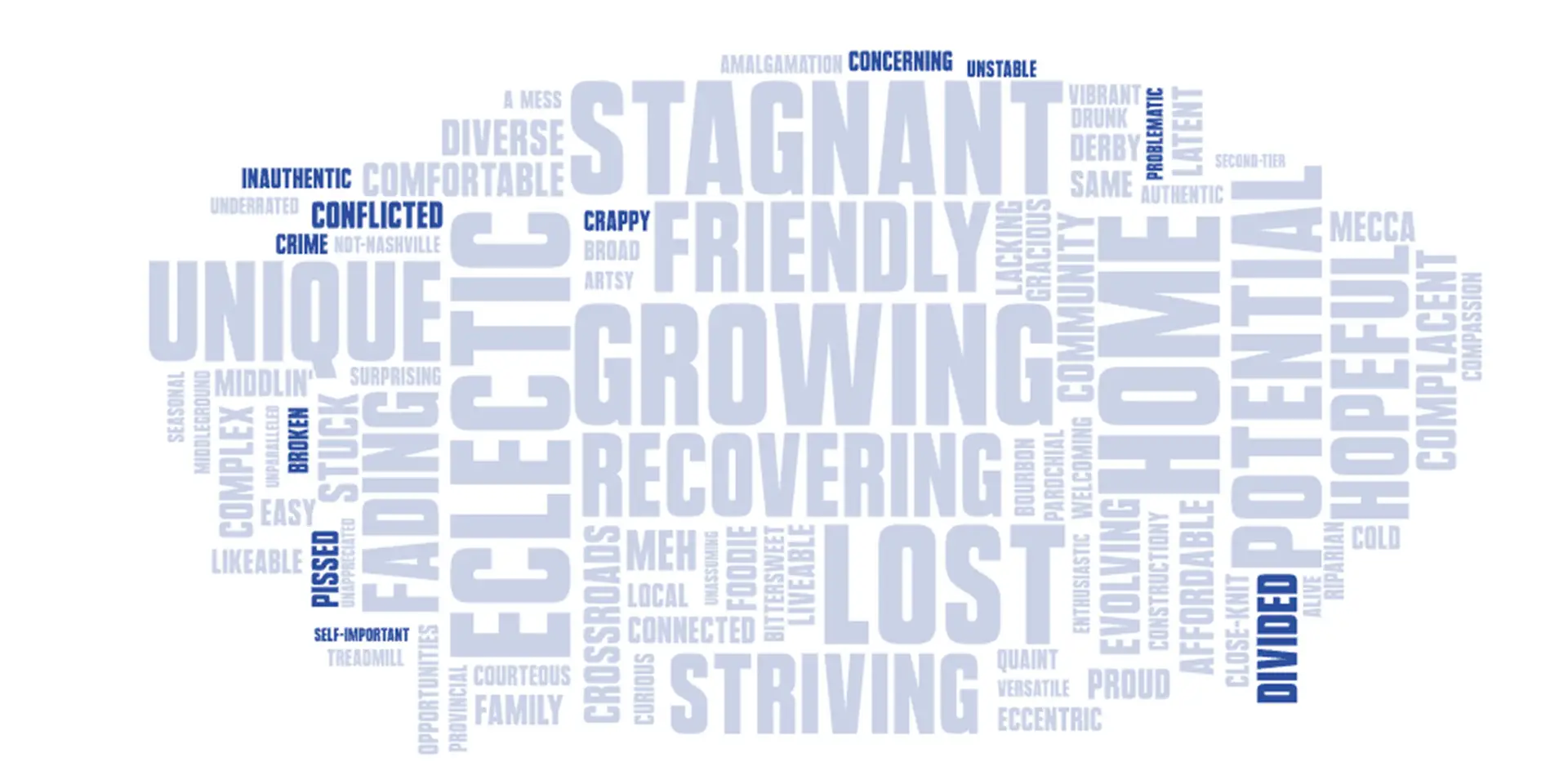
One person in the group, a florist and artist who lived all over the U.S. and Canada doing corporate marketing and creative direction before arriving in Louisville, said it feels like you have to be born here to be considered a “true Louisvillian.”
“Very lonely place.”
What she said surprised me. I’m a transplant to this city, having moved here out of college in 2007 to be a writer at the magazine, but I felt like I belonged right away, even before I started pronouncing it Louahvuhl. The Louisville I was (and am still) discovering was a place where we know how to throw a party, have neighborhood pride, enjoy a pace that allows a bit more time to say hello, all seem to know each other — possibly even if you didn’t go to high school here (that’s me).
In November at the annual Festival of Faiths (theme: Sacred Belonging), all of this was on my mind — including those two words “true Louisvillian.” Before a discussion I facilitated about immigration in our city, I asked the crowd a quick multiple-choice question they could answer on their phone:
How long does somebody have to live here to be considered a “true Louisvillian”?
- Have to be born here
- Ten years or more
- About five years
- As soon as they feel like one
- Attend one Derby
- Whenever they start giving directions based on landmarks that are no longer here
- Whenever they start pronouncing it Louahvuhl
I had a hunch the audience at the multicultural Festival of Faiths might lean toward a welcoming answer, and almost every single one of them who responded said: A person is a Louisvillian as soon as they feel like one. Some in the crowd clapped.
I’d asked the same question to the citywide group. When I shared those results with the audience, some people gasped.
How long does somebody have to live here to be considered a “true Louisvillian”?
I had a hunch the audience at the multicultural Festival of Faiths might lean toward a welcoming answer, and almost every single one of them who responded said: A person is a Louisvillian as soon as they feel like one. Some in the crowd clapped.
I’d asked the same question to the citywide group. When I shared those results with the audience, some people gasped.
How long does somebody have to live here to be considered a “true Louisvillian”?
“As soon as they feel like one” was still the most popular answer, but at just 30%.
A combined almost 40% said a minimum of 10 years.
Another woman who answered “have to be born here” shared a story with me: “This one guy told me he was from New York but has lived in Louisville for 40 years — and I replied that he is still considered a new Louisvillian. He said I was insulting. I said, ‘Sorry, but that is how it is. There are those who have lived here for at least a generation or more and people who move here.’”
And my reaction was: No way is that a thing here, and I put it to the group in the form of another multiple-choice question, wording it like this:
One of us said, “There are those who have lived here for at least a generation or more and people who move here.” Is this a thing? Not a thing?
I was eager to prove my point. Nope, not a thing.
Oops.
That pie chart looks like this:
One of us said, “There are those who have lived here for at least a generation or more and people who move here.” Is this a thing? Not a thing?
Who’s a “true Louisvillian”?
Another person in the group, a church pastor who described himself to me as a gay Japanese immigrant who waited almost 25 years to be eligible for citizenship, said:
“Belonging is a much more intricate topic than the famous John Lennon song ‘Imagine.’’
“What I find most interesting about this conversation is the definition of ‘belonging,’” another of us said. “There are so many layers.”
We’re inviting more of us, more often, to answer questions about all of those layers. Sometimes in the celebratory spirit of Best of Louisville! with an exclamation point, but other times more so with a question mark, as in: Is Louisville doing its best to get a bit better?
And we’re learning so much about this place we call home — this place that can feel diverse and divided, friendly and fragmented, loving and lonely.
But don’t just take my word for it.
Here, take a look…